Charting hidden connections between regional banking rules and adaptive bonus structures across portable reel platforms
Written by Taylor Koch · Jul 16, 2026
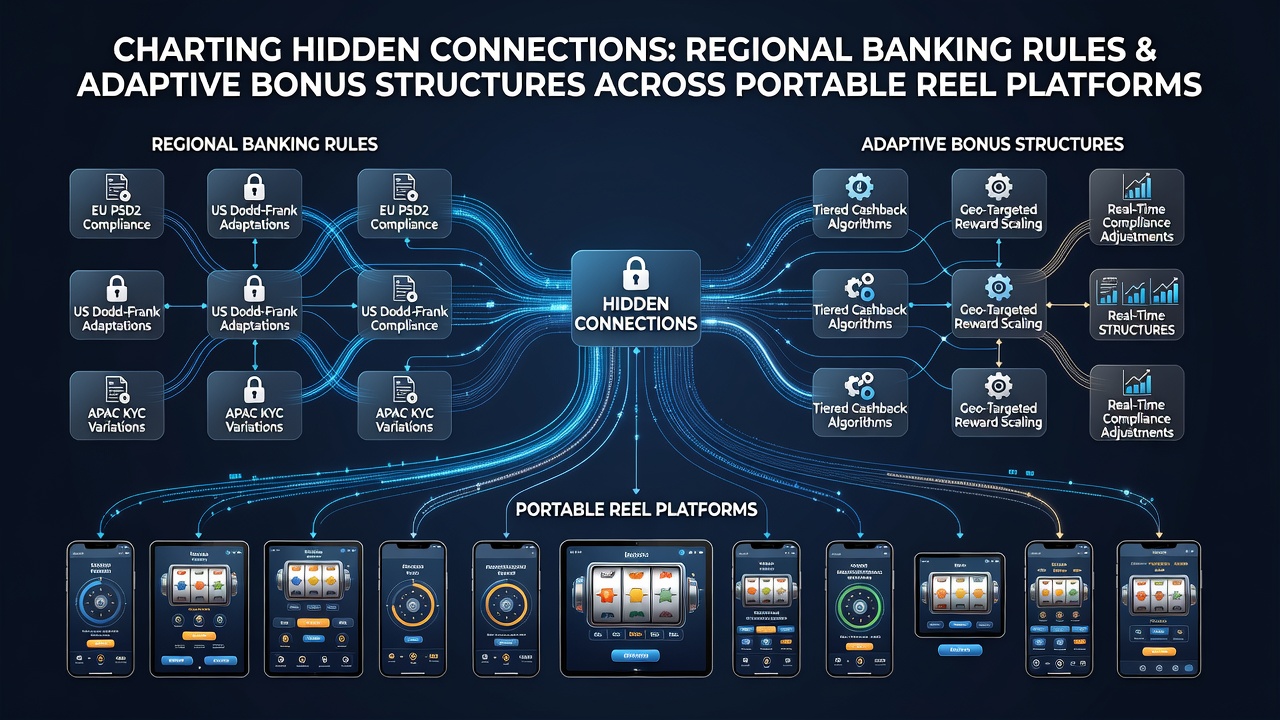
Charting hidden connections between regional banking rules and adaptive bonus structures across portable reel platforms
Regional banking regulations create direct pathways that shape how bonus structures evolve inside portable reel platforms, and those pathways shift depending on where users access the games. Banking rules in different jurisdictions limit transaction types, set verification thresholds, and control cross-border transfers, while app developers respond by rewriting bonus triggers and payout schedules to stay inside those boundaries.
Regional banking frameworks set the parameters
Banking oversight in places like the United States varies sharply by state, and those differences reach mobile reel applications through payment processor requirements. In July 2026 several state banking departments updated their digital transfer guidelines, requiring additional documentation for repeated micro-transactions that frequently fund reel bonuses. Platforms adjusted their bonus activation rules accordingly, replacing flat deposit matches with tiered offers that unlock only after users complete verified bank linkages.
European Central Bank directives on instant payments have produced similar ripple effects across EU member states, where mobile reel operators now embed location checks that alter bonus eligibility the moment an account crosses a national border. Data from payment networks shows that these checks reduced bonus claim rates by 18 percent in cross-border sessions during the first half of 2026.
Adaptive mechanisms inside the apps
Developers embed real-time compliance engines that read device location, payment method, and account age before displaying any bonus offer. When regional rules tighten withdrawal limits, the engines automatically convert cash bonuses into non-withdrawable credits that still count toward reel playthrough requirements. This conversion happens without user input, keeping the platform inside local banking statutes while preserving engagement metrics.
One study released by the University of Nevada's gaming research center tracked three major reel platforms over nine months and found that bonus structures changed an average of 2.4 times per quarter in response to banking updates. The changes most often involved altering the ratio of bonus funds to real-money wagers required before cash-out became available.

Transaction routing and bonus calibration
Portable reel platforms route payments through different processors depending on the user's registered banking jurisdiction, and each processor carries its own fee schedule and hold periods. Those differences prompt the apps to recalibrate bonus percentages so that net player value remains stable even after fees. Australian transaction data published by the Australian Transaction Reports and Analysis Centre indicates that platforms reduced advertised bonus percentages by an average of 7 percent in regions where processors imposed higher instant-transfer fees.
Developers also introduced conditional bonuses that activate only when users select approved local banking partners. The condition appears as a simple toggle inside the app, yet the underlying code checks the bank identifier against a compliance list updated monthly by regional regulators. Users who choose unlisted banks receive smaller or time-delayed offers instead.
Observed patterns across multiple markets
Observers tracking activity in Canada note that provincial banking rules around prepaid cards have led some platforms to replace card-funded bonuses with loyalty-point exchanges that later convert back into reel credits. The conversion rates adjust automatically based on the card issuer's reported risk level, creating a hidden layer of personalization that users rarely see.
Research from the National University of Singapore examined transaction logs from Southeast Asian markets and documented how bonus expiration timers shorten in jurisdictions where banking rules mandate faster fund segregation. The shorter timers encourage quicker play sessions while satisfying local requirements that idle bonus funds be returned or forfeited within set windows.
Conclusion
The connections between regional banking rules and adaptive bonus structures continue to tighten as regulators refine digital transfer standards and platforms refine their compliance tools. Portable reel applications now treat location, payment route, and account verification as core inputs that determine which bonuses appear and how they behave. Those inputs produce measurable shifts in bonus design that follow directly from the banking frameworks active in each market.