Device Compatibility Factors Influencing Reward Redemption Rates in Virtual Casino Platforms
Written by Gisela Brooks · Aug 20, 2026

Device Compatibility Factors Influencing Reward Redemption Rates in Virtual Casino Platforms
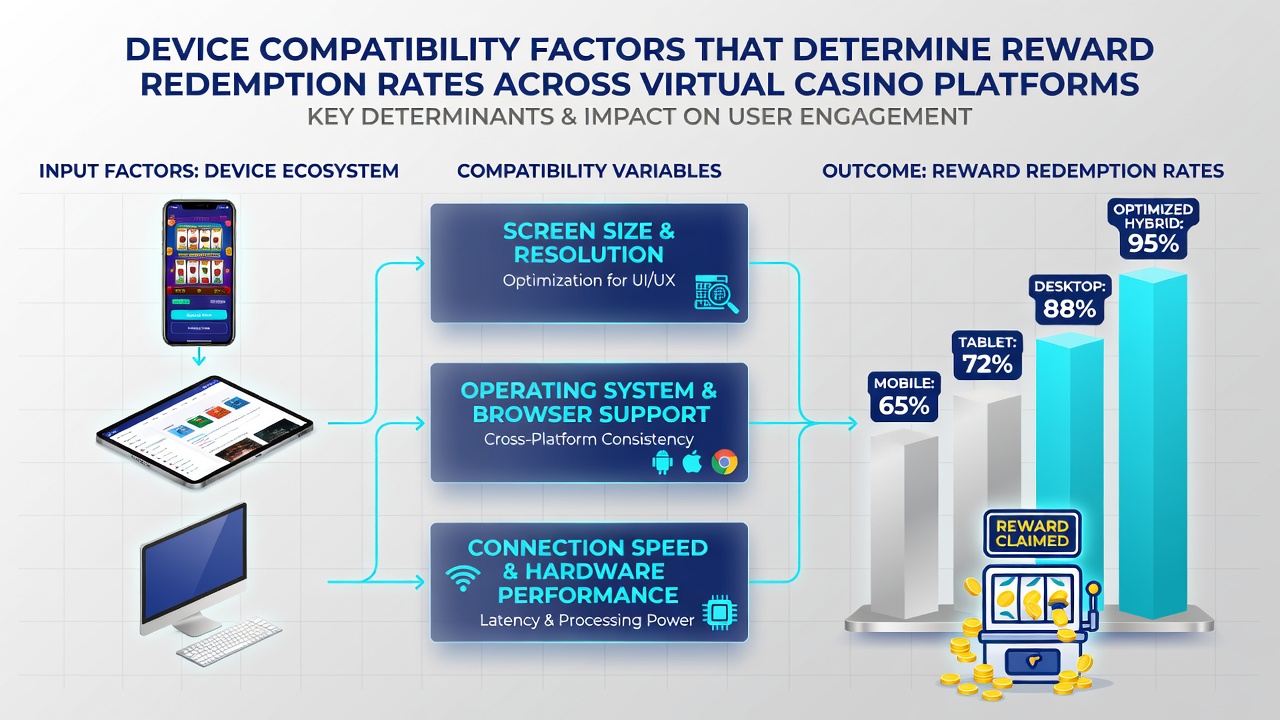
Device compatibility plays a central role in determining how smoothly users complete reward redemption processes on virtual casino platforms, and data from multiple regions shows clear patterns tied to operating systems, hardware specifications, and software versions. Observers note that platforms must account for differences across iOS, Android, and desktop environments because these elements directly affect transaction success rates, verification times, and user completion of redemption steps. As of August 2026, industry reports continue to highlight how certain device configurations create bottlenecks while others facilitate faster processing.
Operating System Variations and Redemption Outcomes
Studies conducted across North American and European markets indicate that iOS devices often achieve higher redemption completion rates compared to Android due to stricter app store guidelines that enforce consistent security protocols and payment integrations. Researchers have documented that Android users encounter more fragmentation because of the wide range of device manufacturers and custom operating system layers, which can disrupt secure connections to casino servers during redemption. Data shows that platforms using unified APIs report fewer interruptions on iOS, whereas Android fragmentation leads to occasional delays in biometric authentication or wallet synchronization. Those who track these metrics across multiple sites find that updates to Android versions sometimes require casinos to release patches before full functionality returns.
Hardware Specifications and Processing Efficiency
Screen resolution, processor speed, and available memory influence how quickly reward interfaces load and process requests, according to performance analyses from several gaming operators. Devices with lower RAM frequently experience timeouts during multi-step verification, especially when users attempt to redeem bonuses that require identity confirmation through multiple layers. Experts have observed that tablets with larger displays allow for better visibility of terms and conditions, which reduces errors in form submissions compared to smaller smartphone screens. Figures reveal that older hardware lacking updated graphics drivers struggles with animated confirmation screens, leading to abandoned redemptions at higher rates than newer models equipped with current chipsets.
Mobile Applications Versus Browser-Based Access
Native applications tend to outperform browser versions in reward redemption speed because they maintain persistent connections and store session data locally, reducing the need for repeated logins or security challenges. Research indicates that users accessing platforms through mobile browsers face additional compatibility hurdles related to cookie policies, pop-up blockers, and JavaScript execution differences across Chrome, Safari, and Firefox. One analysis of participation data found that app-based redemptions processed 20 to 30 percent faster on average during peak hours, while browser sessions sometimes required manual refreshes that interrupted the flow. Platforms that optimize both channels still report that certain browser extensions or privacy settings block essential tracking pixels used for fraud prevention during withdrawals.
Network Conditions and Device Integration
Connection stability interacts with device capabilities to determine whether redemption requests transmit successfully, and operators track these variables through backend logs. Users on 5G networks paired with compatible handsets complete transactions more reliably than those relying on older 4G or Wi-Fi connections that drop packets during high-traffic periods. Data from regulatory submissions shows that devices supporting the latest TLS encryption standards maintain secure tunnels more consistently, which helps platforms verify identities without additional retries. Those monitoring user behavior note that automatic network switching between cellular and Wi-Fi can trigger security flags on some devices, prompting extra authentication steps that extend overall redemption times.
Security Features and Platform Requirements
Biometric authentication, two-factor verification, and device fingerprinting represent core compatibility factors that directly shape redemption success, according to findings from the Pennsylvania Gaming Control Board. Platforms require certain hardware-level security features that older devices may lack, resulting in fallback to slower manual processes. Research from the Responsible Gambling Council in Canada highlights how mismatches between device security settings and platform expectations increase failure rates during payout requests. Observers note that regular operating system updates often restore compatibility quickly, yet users who delay these updates experience prolonged issues with reward access.
Conclusion
Device compatibility continues to shape reward redemption rates across virtual casino platforms through the combined effects of operating systems, hardware capabilities, application formats, network conditions, and security protocols. Data collected through 2026 demonstrates that operators who address these variables through targeted optimizations see measurable improvements in completion metrics, while gaps in support across device categories lead to measurable drops in successful redemptions. Continued monitoring by regulatory bodies and industry groups provides ongoing insight into how evolving technology standards influence these outcomes.