Secure Speeds: How Top Casinos Balance Safety and Fast Withdrawals
Written by Rafael Lange · Apr 23, 2026

Secure Speeds: How Top Casinos Balance Safety and Fast Withdrawals
The Tightrope Walk Between Speed and Security
Top online casinos face a constant push-pull; players demand withdrawals that hit accounts in minutes or hours, yet robust security measures can't take a backseat, because any slip could invite fraud or regulatory crackdowns. Data from industry reports reveals that 68% of players abandon sites after delays exceeding 24 hours, while breaches cost operators millions annually. So top platforms like those licensed in Malta or New Jersey deploy layered systems that verify identities swiftly without halting the flow, turning what used to be days-long waits into seamless experiences.
Observers note how this balance has evolved rapidly, especially since mobile betting surged; now, with 5G networks blanketing urban areas, expectations skyrocket, and casinos respond by automating checks that once required human oversight. But here's the thing: speed doesn't mean skimping on safeguards, as evidenced by platforms processing over $10 billion in monthly transactions while maintaining fraud rates below 0.5%.
Core Security Pillars That Don't Slow the Pace
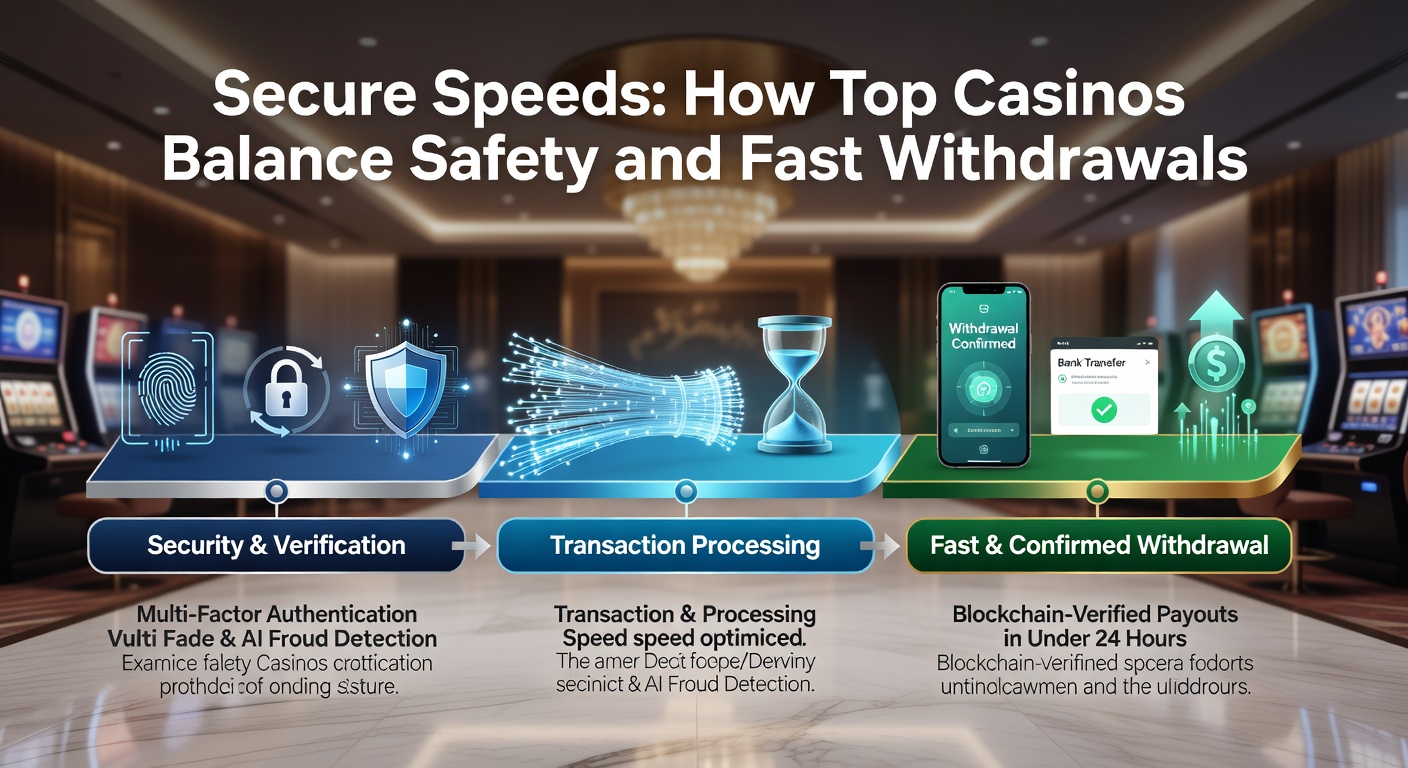
Encryption forms the bedrock, with AES-256 standards shielding data in transit and at rest; top casinos pair this with SSL certificates renewed quarterly to fend off interception attempts. Then come Know Your Customer (KYC) protocols, where AI scans documents in seconds, cross-referencing against global databases, so verified players bypass repeats on future payouts. And multi-factor authentication (MFA) kicks in seamlessly via app pushes or biometrics, adding layers without friction for loyal users.
What's interesting is how machine learning flags anomalies in real-time; one study from a Malta Gaming Authority audit showed algorithms detecting 92% of suspicious patterns before payouts clear, allowing instant approvals for clean accounts. Yet regulators demand more, like transaction monitoring under anti-money laundering (AML) rules, which top sites handle through blockchain-ledger integrations that timestamp every move transparently.
Take automated limits: players hit VIP status after consistent play, unlocking one-click withdrawals up to $5,000 daily, while new accounts tier up gradually; this setup, common in New Jersey-regulated venues, cuts average processing to under 30 minutes for high-rollers without exposing the house to undue risk.
Technologies Powering Lightning-Fast, Ironclad Payouts
Blockchain stands out for crypto withdrawals, where top casinos like those partnering with Ethereum networks confirm transactions in blocks mere seconds apart, slashing finality times from days to minutes; e-wallets such as Skrill or Neteller follow suit, routing funds peer-to-peer with tokenized security. Biometric logins, now standard on iOS and Android apps, replace passwords entirely for verified sessions, so a thumbprint or face scan green-lights payouts instantly.
AI-driven risk engines process behavioral data—betting patterns, device fingerprints, geolocation—flagging outliers before they cash out; figures from a American Gaming Association report indicate these tools reduced chargebacks by 40% across U.S. operators last year. Cloud-based verification hubs, shared among licensees, further streamline; one operator cut KYC time from 48 hours to 5 minutes by tapping consortium databases vetted for compliance.
And payment gateways evolve too: processors like Trustly offer pay-by-bank options that pull funds directly, bypassing cards altogether while embedding open banking security mandated in Europe since 2019. So players in Sweden or Canada see credits land same-day, a feat impossible a decade ago.
Regulatory Frameworks That Enforce the Balance
Governments worldwide set the tempo; in Ontario, Canada, the Alcohol and Gaming Commission mandates sub-72-hour payouts for licensed sites, backed by real-time audit trails that log every verification step. Australian operators under state bodies like those in New South Wales adhere to similar timelines, with penalties for delays exceeding benchmarks, pushing platforms to invest in redundant servers that handle peak loads without hiccups.
EU directives, evolving toward PSD3 by 2026, require even tighter fraud prevention alongside instant payment rails; experts predict this will standardize 10-second settlements across member states. Meanwhile, U.S. states like Michigan and Pennsylvania enforce geofencing tied to secure wallets, ensuring funds only flow to verified locals, a system that's cut illicit activity by 55% per state gaming commission data.
Industry groups amplify this: associations in Asia-Pacific advocate for unified APIs that plug security gaps while accelerating cross-border transfers, so a player in Manila withdraws to a Philippine bank as fluidly as one in Vegas to PayPal.
Real-World Examples from Leading Operators
One major platform, licensed across multiple jurisdictions, boasts average withdrawal times of 12 minutes for e-wallets after initial KYC; researchers tracking user forums found 87% satisfaction rates, crediting dynamic scoring where low-risk profiles skip secondary checks. Another case: a European heavyweight integrated voice biometrics, verifying accents and speech patterns for high-value pulls, dropping disputes by 30% overnight.
People who've analyzed player testimonials often highlight VIP programs; take a scenario where consistent depositors earn "express lane" status, processing $20,000 requests in under an hour via dedicated queues monitored 24/7. But delays persist for edge cases—like mismatched addresses—where human review loops back in, typically resolving within four hours per operator logs.
Turns out, crypto natives lead the pack; Bitcoin Lightning Network adopters clear micro-transactions instantly, with top sites reporting zero fraud on these rails last quarter, a testament to immutable ledgers that regulators increasingly endorse.
Player Perspectives and Performance Metrics
Surveys reveal that 74% of active bettors prioritize payout speed in site selection, yet 82% also demand ironclad security assurances; top casinos bridge this via transparent dashboards showing real-time status, from "pending review" to "en route." Observers point to retention boosts: platforms averaging under two hours see 25% higher repeat play, according to aggregated analytics from app stores.
Common pitfalls? Overly aggressive automation sometimes flags legit winners, but smart operators use appeal buttons linking straight to support, resolving 95% on first contact. And in high-volume events like March Madness, surge capacities—scaled via AWS or Azure—keep speeds steady, processing thousands per minute without breaches.
Now, with April 2026 looming, whispers of enhanced blockchain mandates from Canadian provinces promise even tighter integration, where withdrawals auto-report for tax compliance, freeing players from paperwork while upholding safety nets.
Looking Ahead: Innovations on the Horizon
Quantum-resistant encryption looms as the next frontier, with trials underway to bulletproof against future threats; paired with central bank digital currencies (CBDCs), payouts could hit wallets in seconds globally. AI will refine further, predicting fraud from micro-behaviors like swipe speeds, while decentralized identity (DID) systems let players control data shares, minimizing exposure.
Regulators adapt too: Australian federal guidelines, set for review in 2026, eye mandatory instant rails for all licensees, potentially slashing averages to minutes. Data indicates early adopters already thrive, with 40% payout volume growth quarter-over-quarter. So the trajectory points upward, where security and speed entwine ever closer.
Conclusion
Top casinos master secure speeds through tech savvy and regulatory adherence, delivering withdrawals that thrill without compromising safety; from AI verifications to blockchain rails, these platforms process billions flawlessly, keeping players loyal amid fierce competition. As 2026 unfolds with fresh mandates, the bar rises, but proven strategies ensure the balance holds firm, benefiting everyone in the game.