State-Level Restrictions Reshape Sweepstakes Casino Landscape Throughout 2026
Written by Taylor Koch · May 31, 2026

State-Level Restrictions Reshape Sweepstakes Casino Landscape Throughout 2026
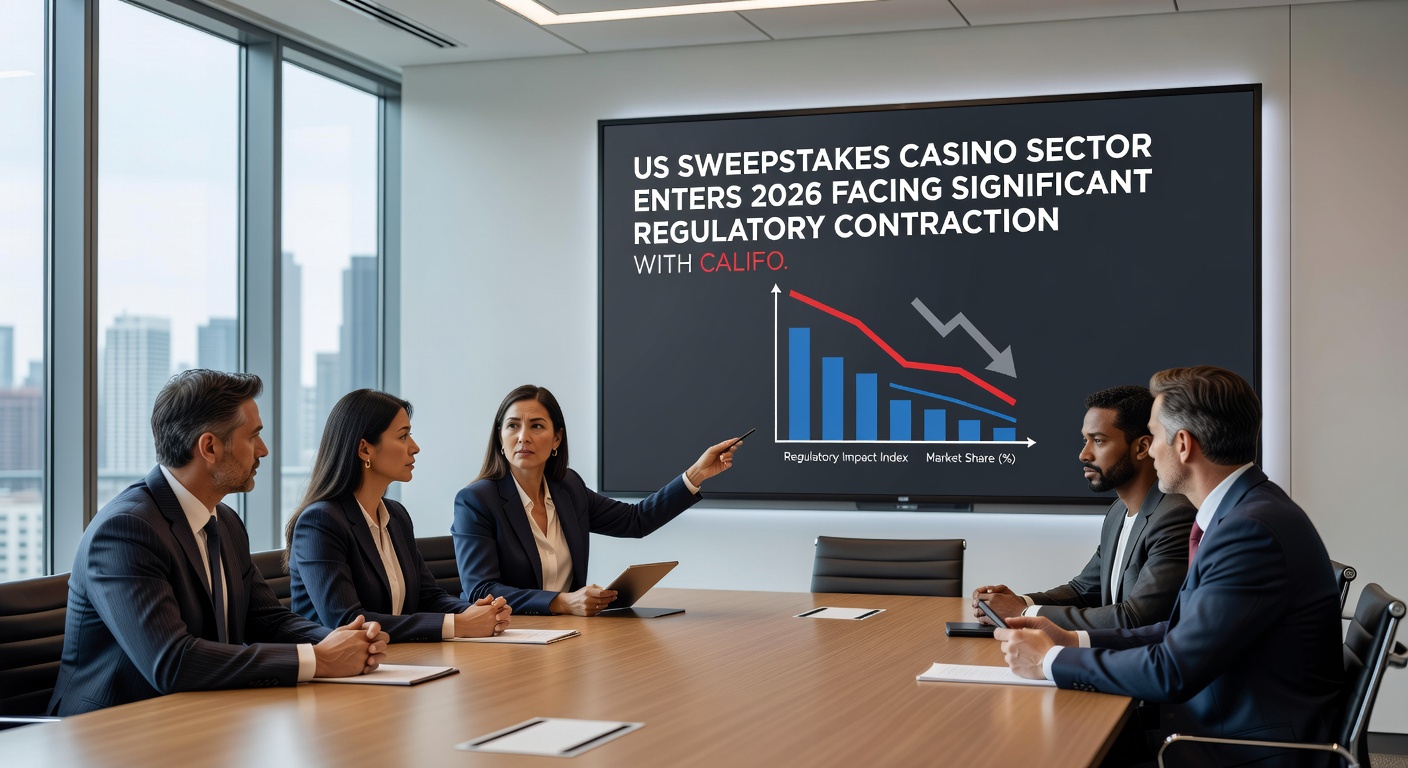
California’s Assembly Bill 831 went into force on January 1 2026 and removed an estimated one-fifth of national revenue from the sweepstakes casino sector while additional states moved quickly to implement similar measures. Observers note that the legislation targeted specific operational models and forced major operators to reassess their geographic footprint almost immediately. Data from industry tracking services show that the bill’s enforcement coincided with earlier exits from seven other states during 2025, creating a cumulative contraction that continued into the first half of 2026.
Sequence of State Actions Defines the Contraction Timeline
Indiana followed California’s lead when House Bill 1052 received the governor’s signature in March 2026, with enforcement scheduled to begin July 1 of the same year. The measure introduced licensing requirements and advertising limits that directly affected sweepstakes platforms previously operating without state-level oversight. Earlier exits from Maine, New York, Connecticut, Mississippi, Louisiana, Montana, and Nevada had already reduced available markets, and the combined effect left operators navigating a patchwork of new rules rather than a uniform national environment.
Those who track legislative calendars point out that the 2025 departures occurred in quick succession after initial regulatory signals emerged in each jurisdiction. By the time 2026 began, the sector had already absorbed losses from those states, and the California and Indiana developments accelerated the pace of adjustment. Figures released by state gaming commissions indicate that remaining active markets represent a narrower base than operators enjoyed twelve months earlier.
Operator Responses Include Brand Launches and Strategic Shifts
Virtual Gaming Worlds, the parent company of Chumba Casino and LuckyLand Slots, withdrew from multiple restricted states while introducing new brands such as LuckyLand Casino and Just Slots to maintain presence in jurisdictions that still permitted operations. Company statements describe these moves as portfolio engineering designed to align product offerings with evolving compliance demands. Marketing teams simultaneously increased emphasis on responsible-play messaging and began testing alternative engagement models that rely less on sweepstakes mechanics.
Litigation remains ongoing in several jurisdictions where operators challenge the scope of new statutes, and marketing restrictions have limited traditional promotional channels. Research reports from gaming analytics firms show that operators are reallocating resources toward states with clearer regulatory pathways while monitoring court outcomes that could reopen previously closed markets. The reality is that portfolio diversification now serves as a primary hedge against further legislative changes.
Market Impact Extends Beyond Immediate Revenue Losses
Industry associations have documented how the contraction affects employment at call centers, software development teams, and compliance departments that support sweepstakes platforms. Revenue displacement has prompted some companies to explore partnerships with land-based gaming entities or to pivot toward skill-based gaming formats that fall outside current sweepstakes definitions. State regulatory bodies in unaffected regions continue to review their own statutes, creating uncertainty that extends through the remainder of 2026.
According to data compiled by the National Council of Legislators from Gaming States, the combined effect of the listed state actions represents the most significant contraction the sweepstakes sector has experienced since its expansion phase began. Companies that once operated across dozens of states now maintain active platforms in a smaller subset, and strategic planning documents emphasize agility over geographic breadth.
Conclusion
The regulatory developments that began with California’s January 1 enforcement and continued through Indiana’s July timeline have produced a measurable contraction in the sweepstakes casino sector. Operators have responded with brand launches, litigation, and operational adjustments that reflect the new constraints. As additional states evaluate similar legislation, the sector’s structure continues to evolve under the pressure of these state-level actions.